Why Basic One-Inch Filters Are Only the Beginning
Walk into almost any home or commercial office built over the last thirty years, and you will find a standard one-inch filter slot tucked inside a hallway return grille or slipped into a narrow rack beside the furnace cabinet. While that thin pleated panel does a respectable job catching large lint fibers, carpet fuzz, and stray pet hair so your blower wheel does not jam up like an old vacuum roller, it lets an invisible crowd of microscopic biological and chemical pollutants sail right past. Ultrafine combustion particles, wildfire smoke aerosols, volatile organic compounds, mold spores, bacteria, and airborne viral droplets are small enough to slip straight through standard woven filter media without slowing down.
At the same time, modern building codes and energy-efficiency retrofits have sealed homes and commercial buildings tighter than ever using spray-foam insulation, house wraps, and low-E double-pane windows. While tight building envelopes are fantastic for keeping conditioned air from leaking outdoors, they also trap indoor pollutants inside with nowhere to escape. According to environmental health studies, indoor air frequently becomes two to five times more polluted than outdoor air, and sometimes far worse during peak allergy or smoke seasons; unless your HVAC system is upgraded with genuine whole-building air purification technology.
High-Efficiency Media Cabinets and True HEPA Filtration
One of the highest-impact upgrades an HVAC technician can install at your air handler is a four- or five-inch deep pleated media filter cabinet. Many property owners assume they can achieve hospital-grade filtration simply by cramming a dense, ultra-high-rated MERV-13 one-inch filter into a standard return grille, only to discover their blower motor straining against excessive static pressure and starving distant bedrooms of airflow. Deep-pleat media cabinets solve that physics problem brilliantly by accordion-folding filtration fabric across dramatically more surface area.
Because air passes slowly and evenly across dozens of deep pleats, a quality MERV-11 to MERV-13 media cartridge captures microscopic particulates down to 0.3 microns while maintaining remarkably low external static pressure drop; allowing your blower motor to breathe effortlessly while lasting six to twelve months between cartridge swaps. For households managing severe asthma, autoimmune sensitivities, or heavy regional wildfire smoke, bypass HEPA filtration systems mounted directly onto the main return trunk continuously scrub ninety-nine-point-nine-seven percent of airborne particulates out of circulation without restricting primary system airflow.
UV-C Germicidal Lights and Photo-Catalytic Oxidation
Even the finest particulate filter in the world cannot stop microscopic organisms from colonizing damp, dark surfaces located downstream inside your air handler, specifically the wet aluminum fins of your indoor evaporator coil and the standing water inside the condensate drain pan. During humid cooling seasons, those cold, wet coil fins create an ideal incubator for mold spores, bacteria, and slimy biological film that restricts heat transfer and releases that notorious “dirty-sock” odor every time the blower kicks on.
Installing medical-grade UV-C germicidal lamps directly above the evaporator coil bathes those surfaces in targeted ultraviolet light twenty-four hours a day, scrambling microbial DNA and neutralizing mold and bacteria before they ever get a chance to multiply. Pairing germicidal UV lamps with advanced photocatalytic oxidation or needlepoint bipolar ionization purifiers inside the supply plenum takes air cleaning a step further, actively breaking down gaseous volatile organic compounds released by household cleaners, new carpeting, cabinetry off-gassing, pet odors, and cooking fumes into harmless water vapor and carbon dioxide.
Whole-Home Dehumidification and Fresh-Air Ventilation
In humid climates, true indoor air quality depends just as heavily on moisture management as it does on particulate filtration. Standard air conditioners only remove humidity while the cooling compressor is actively running; during mild, muggy spring and autumn days when outdoor temperatures sit in the low seventies, your AC barely cycles on while indoor relative humidity climbs past sixty-five percent. A standalone whole-home dehumidifier tied directly into your supply and return ductwork maintains an ideal forty-five to fifty percent relative humidity year-round, starving dust mites and fungal spores of the moisture they need to survive while making your home feel noticeably cooler at higher thermostat settings.
Meanwhile, Energy Recovery Ventilators solve the stale-air dilemma in tightly sealed modern buildings. Rather than cracking open a window and letting hot, humid, pollen-filled air pour inside, an ERV continuously exhausts stale indoor air laden with carbon dioxide and household odors while drawing in fresh outdoor air through high-efficiency filters, transferring heat and moisture between the two airstreams so your HVAC system never wastes energy conditioning incoming air. Integrating modern indoor air quality systems transforms an ordinary furnace or air conditioner into a true whole-building health engine.
Starting With Clean Ductwork Before Installing Upgrades
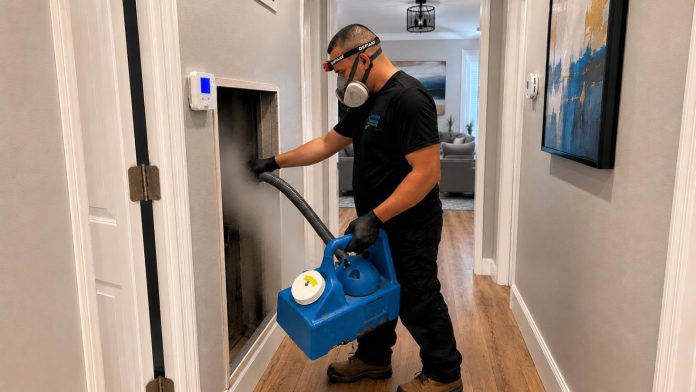
Before investing in high-efficiency purifiers, UV-C coil lamps, or deep media cabinets, starting with spotless ductwork and a sanitized air handler ensures your new equipment is not fighting decades of existing dust buildup. Adding advanced purification onto choked, leaky ducts is a bit like installing a high-performance water filter onto rusty, sediment-filled pipes. A qualified technician can measure your system’s static pressure with a digital manometer, seal return plenum leaks, clear existing debris, and design a balanced purification package matched to your exact blower capacity.
Breathe Cleaner, Healthier Air in Every Room
Upgrading your indoor air quality goes far beyond swapping out a flimsy store-bought filter every few months; deep media filtration, UV coil sanitation, bipolar oxidation, and balanced humidity control protect both your family’s respiratory health and your long-term HVAC investment. By pairing clean airways with smart whole-building purification technology, you create an indoor environment that feels crisp, fresh, and genuinely restorative in every season. Contact a ventilation and indoor air quality specialist today to design a custom air purification upgrade tailored to your home or business.