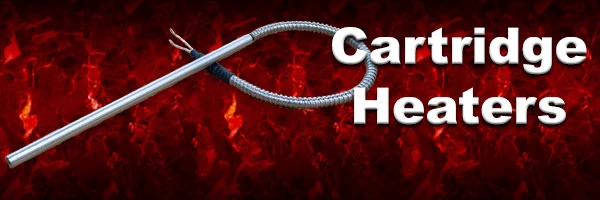
Extreme process heat places heavy demands on compact heating components. Cartridge heaters handle those conditions by combining tightly packed insulation, durable resistance wire, heat-tolerant sheaths, and careful watt-density control. Their performance still depends on correct sizing, close surface contact, sound wiring, and protection from conditions that push the element beyond its design limits.
Dense Internal Construction Moves Heat Efficiently
Inside a cartridge heater, resistance wire converts electrical energy into heat. Ceramic insulation surrounds that wire, keeps it separated from the metal sheath, and transfers thermal energy toward the outside surface. Manufacturers compress these internal materials during production so fewer air spaces remain inside the heater.
Greater compaction improves heat movement and supports the resistance coil during vibration and repeated expansion. Loose insulation can allow local hot spots, unstable resistance, or internal wire movement. A skilled industrial heating elements manufacturer controls fill density, coil placement, and swaging pressure to produce a heater that responds evenly under demanding temperatures.
High-Temperature Alloys Resist Oxidation and Distortion
Sheath material determines how well the heater tolerates heat, corrosion, and contact with the surrounding process. Stainless steels serve many industrial environments, while nickel-based alloys may provide stronger resistance to oxidation and chemical attack at higher operating temperatures.
Resistance wire also needs the right alloy for the intended load. Heating alloys must maintain predictable electrical behavior without sagging, becoming brittle, or reacting with nearby materials. Custom industrial heaters may pair specialized wire with a particular sheath to suit heated molds, sealing equipment, ovens, dies, or processing machinery.
Watt Density Must Match Heat Transfer Conditions
Watt density measures how much power a heater releases across its heated surface. High watt density produces faster warm-up, but it also raises internal and sheath temperatures. Excessive output becomes especially damaging when heat cannot leave the cartridge quickly enough.
Tight contact with the surrounding metal gives cartridge heaters a path for transferring energy away from the sheath. Oversized bores create insulating air gaps, causing the heater to operate hotter than the equipment surface. Engineers therefore match wattage to bore fit, heated mass, target temperature, cycle time, and expected thermal loss.
Proper Bore Fit Prevents Localized Overheating
Machined holes should closely match the heater diameter while still allowing installation and removal. A loose fit reduces conduction, encourages uneven heating, and may shorten service life. Rough or tapered bores can create similar problems because only part of the sheath touches the surrounding metal.
Correct installation practices include:
- Cleaning debris and oil from the bore
- Checking hole diameter and straightness
- Avoiding hammering or forceful insertion
- Keeping leads free from twisting or sharp bending
- Using release compounds only when approved
- Providing a safe method for future removal
Accurate machining protects both the heater and the equipment receiving heat. Suitable industrial heating accessories, such as retaining plates or fittings, can also prevent movement during operation.
Lead Ends Need Protection From Conducted Heat
Electrical terminations often have lower temperature limits than the main heated section. Heat traveling toward the lead end can weaken insulation, damage seals, or loosen internal connections. Designers often include an unheated section near the termination to reduce that exposure.
Lead construction should match the surrounding environment as well. Fiberglass insulation handles elevated temperatures in dry areas, while metal braid protects against abrasion. Flexible conduit, ceramic beads, right-angle exits, and sealed transitions may be added where industrial heating products face vibration, moisture, or restricted space.
Temperature Controls Prevent Thermal Runaway
Even a well-built heater can fail if the controller allows temperatures to rise without restraint. Thermocouples or resistance temperature detectors provide feedback, while relays or power controllers regulate electrical input. Sensor placement must represent the actual process rather than an unusually cool or hot spot.
Independent high-limit protection adds another safety layer. A separate sensor and cutoff device can stop power if the primary controller fails or the process loses heat transfer. Systems using industrial heaters USA designs should also match breakers, fuses, contactors, and wiring to startup current and continuous load.
Thermal Cycling Can Be Harder Than Steady Heat
Repeated heating and cooling forces the internal parts to expand and contract. Frequent cycling may fatigue resistance wire, loosen connections, or crack sealing materials faster than steady operation at the same peak temperature. Rapid temperature changes create even greater stress because different materials expand at different rates.
Gradual control strategies can extend working life. Proportional control, staged heating, and reduced switching frequency often limit sharp thermal swings. Equipment operators should also avoid energizing high-output heaters before confirming that the surrounding tool, liquid, or process material can absorb the generated heat.
Moisture and Contamination Affect Electrical Safety
Ceramic insulation can absorb moisture during storage or shutdown, especially when terminals remain exposed in humid areas. That moisture may lower insulation resistance and cause leakage current or ground faults during startup. Controlled storage and pre-installation testing help identify the issue before full voltage reaches the element.
Contaminants around the sheath can also create trouble at high temperatures. Oils, plastics, chemicals, and residue may burn, corrode the surface, or form deposits that block heat transfer. Regular inspection keeps the heater surface and mounting area free from materials that interfere with performance.
Custom Design Extends Performance at Elevated Temperatures
Standard heaters cannot cover every high-temperature application. Unusual bore dimensions, uneven heat loads, limited lead clearance, corrosive materials, and rapid production cycles may require altered watt distribution or specialized construction. Zoned heating can place more output where heat loss is greatest and reduce power near sensitive sections.
Thermal Corporation provides cartridge heaters, custom industrial heaters, and related industrial heating accessories for machinery that operates under demanding thermal conditions. Its manufacturing capabilities help equipment builders select sheath materials, watt densities, dimensions, lead configurations, and electrical ratings that suit the actual application rather than relying on a general-purpose heater.