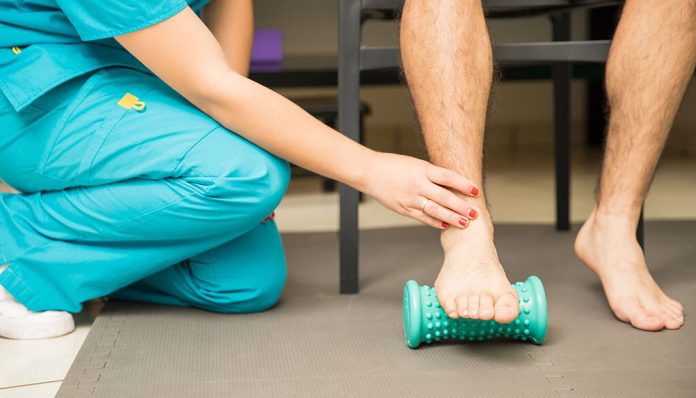
Accurate diagnosis begins with understanding how the foot behaves under stress and movement. Subtle findings often reveal why symptoms persist or worsen over time. A podiatrist in Decatur AL focuses on specific clinical signs to confirm plantar fasciitis and rule out similar conditions.
Point Tenderness Specifically at the Medial Calcaneal Tubercle
Precise pain at the inner heel often signals irritation where the plantar fascia attaches to bone. A plantar fasciitis doctor applies direct pressure to this area to assess sensitivity. Localized tenderness helps confirm the condition and separates it from generalized heel discomfort. A Decatur podiatrist uses this targeted exam to identify the exact source of pain. Consistent response during palpation supports the diagnosis. Focusing on this point allows the plantar fasciitis specialist to determine how advanced the irritation may be and guide appropriate treatment options.
Tightness or Restricted Range of Motion in the Gastrocnemius-soleus Complex
Limited flexibility in the calf muscles can increase tension on the plantar fascia. A plantar fasciitis specialist evaluates how well the ankle moves during dorsiflexion. Tightness in the gastrocnemius-soleus complex often places additional strain on the heel during walking. A podiatrist in Decatur AL measures this restriction to understand how it contributes to symptoms. Reduced motion can slow recovery if not addressed. Identifying muscle tightness helps the plantar fasciitis doctor include stretching or therapy as part of a complete care plan.
Windlass Mechanism Functionality During Great Toe Extension
The windlass mechanism plays a key role in stabilizing the arch during movement. A Decatur podiatrist observes how the plantar fascia responds when the big toe extends. Proper function tightens the fascia and supports the arch. Impaired response may indicate reduced structural support. A plantar fasciitis doctor uses this test to assess how the foot manages load during walking. Abnormal findings can explain ongoing discomfort. Evaluating this mechanism helps the plantar fasciitis specialist determine whether structural correction is needed.
Visible Flattening or Over-pronation of the Longitudinal Arch
Arch collapse or excessive inward rolling of the foot can increase stress on soft tissue. A podiatrist in Decatur AL examines standing posture and foot alignment to detect these changes. Over-pronation often leads to uneven pressure distribution across the heel and arch. A plantar fasciitis specialist considers how this alignment affects daily movement. Visible flattening may require support through orthotics or footwear changes. Recognizing these patterns allows the plantar fasciitis doctor to address underlying mechanical issues that contribute to ongoing strain.
Presence of Morning Stiffness or “Start-up” Pain Patterns
Stiffness after periods of rest is a common sign of plantar fasciitis. A Decatur podiatrist asks about symptoms that occur during the first steps of the day. This pattern often indicates tightening of the fascia overnight. A plantar fasciitis doctor uses patient history to confirm how symptoms develop over time. Increased discomfort after inactivity helps distinguish this condition from others. Understanding these patterns allows the plantar fasciitis specialist to tailor treatment strategies that reduce stiffness and improve mobility throughout the day.
Thickness of the Plantar Fascia via Bedside Musculoskeletal Ultrasound
Imaging provides valuable insight into tissue condition without invasive procedures. A plantar fasciitis specialist may use ultrasound to measure the thickness of the fascia. Increased thickness often reflects chronic irritation or degeneration. A podiatrist in Decatur AL relies on these measurements to evaluate severity. Clear imaging helps confirm diagnosis and track progress during treatment. Visual evidence supports more precise decision-making. Monitoring tissue changes allows the plantar fasciitis doctor to adjust care based on how the fascia responds over time.
Gait Disturbances Such As Limping or Altered Foot Strike to Avoid Heel Pressure
Changes in walking patterns often develop as the body tries to avoid discomfort. A Decatur podiatrist observes how weight shifts during movement. Limping or altered foot strike can place stress on other areas, leading to additional issues. A plantar fasciitis doctor evaluates these patterns to understand how compensation affects recovery. Abnormal gait may prolong symptoms if not corrected. Identifying these changes allows the plantar fasciitis specialist to recommend adjustments that restore more balanced movement and reduce strain.
Differential Signs of Baxter’s Nerve Entrapment or Fat Pad Atrophy
Certain conditions can mimic plantar fasciitis and require careful evaluation. Baxter’s nerve entrapment may cause sharp or burning sensations near the heel. Fat pad atrophy reduces cushioning and increases pressure on the bone. A podiatrist in Decatur AL looks for signs that separate these issues from typical plantar fasciitis.
A plantar fasciitis specialist uses physical exams and patient feedback to distinguish between conditions. Accurate identification ensures that treatment addresses the correct source. Recognizing these differences prevents ineffective care and supports better outcomes.
The Foot Clinic provides detailed evaluations that go beyond surface-level symptoms to identify the true source of plantar fasciitis. Their team examines structural alignment, movement patterns, and nerve-related factors that may contribute to ongoing discomfort. By combining hands-on assessment with advanced diagnostic tools, The Foot Clinic helps patients in Decatur AL move toward lasting relief while improving overall foot function.