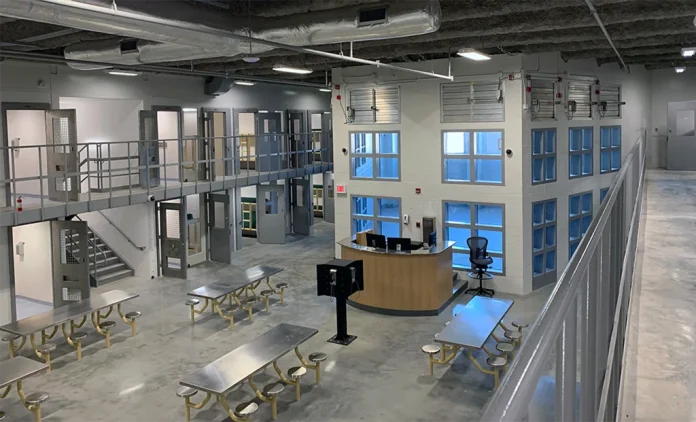
Pressure on correctional facilities rarely arrives slowly. Rising inmate populations, shifting legal standards, and aging infrastructure force administrators to act faster than traditional construction allows. Modular jails have stepped into that gap, offering a practical path forward that balances speed, safety, and long-term planning.
Modular Units Provide an Immediate Solution to Capacity Crises
Unexpected surges in inmate populations can overwhelm existing housing in a matter of weeks. Facilities facing overcrowding often cannot wait years for conventional builds, which is where modular jails make a measurable difference. Prefabricated units arrive ready for rapid installation, allowing administrators to relieve congestion without compromising operational control. Unlike brick-and-mortar expansions, modular systems can be deployed in phases that match urgent needs. Teams experienced in detention builds, including Cornerstone detention equipment contractors, coordinate layouts that maintain sightlines, security flow, and staff efficiency even under tight timelines. Facilities gain breathing room while still meeting compliance standards tied to inmate safety and classification.
Accelerating Construction Timelines
Traditional correctional construction involves long design cycles, weather delays, and layered inspections that extend project timelines. Modular builds shorten this process by shifting much of the work into controlled factory environments, where schedules remain predictable. Time saved during fabrication translates directly into earlier occupancy.
Parallel workflows also play a major role. While site preparation moves forward, fabrication continues off-site, eliminating the bottlenecks common in standard builds. A Cornerstone security detention equipment contractor often integrates security hardware during production, reducing installation delays later. Facilities benefit from a streamlined path that moves from planning to operation in a fraction of the usual timeframe.
Much of the Work Occurs Off-site
Controlled manufacturing environments allow for tighter quality control than open job sites. Skilled crews assemble modules indoors, free from weather interruptions that often slow field construction. Consistency in materials and assembly leads to fewer defects and more predictable outcomes once units arrive. Transporting nearly finished units to the site minimizes disruption within active correctional grounds. Operations continue with fewer interruptions, and safety risks tied to extended on-site construction decrease. Modular jails therefore support both efficiency and operational continuity, which remains critical for facilities that cannot afford downtime.
Allows Facilities to Easily Add, Remove, or Reconfigure Units
Correctional needs rarely stay fixed over time. Population levels shift, classification requirements change, and new regulations may demand different housing arrangements. Modular systems respond to these variables with flexibility that traditional structures cannot match.
Units can be expanded, relocated, or reconfigured without dismantling entire buildings. Administrators gain the ability to adjust layouts for medical isolation, segregation, or general housing without starting from scratch. This adaptability helps facilities remain responsive to both short-term demands and long-term planning goals, while reducing the financial strain of repeated large-scale construction.
Prefabricated Units Are Engineered with Robust Steel Structures
Security remains the foundation of any detention environment, and modular units are built with that priority in mind. Reinforced steel framing, tamper-resistant fixtures, and secure door systems are integrated into each unit during fabrication. These features meet strict standards required for correctional use.
Durability also plays a role in lifecycle value. Steel-based construction resists wear from daily use and reduces maintenance demands over time. Cornerstone prison supply manufacturers often contribute specialized components such as secure locking systems and reinforced panels, ensuring each module performs to the same level as permanent structures. Facilities receive strength without sacrificing speed.
Providing Temporary or Permanent Options
Short-term challenges sometimes require temporary solutions, but many facilities also need long-term capacity planning. Modular systems accommodate both scenarios, offering installations that function as interim housing or as permanent expansions.
Temporary deployments help manage overflow during renovations or population spikes, while permanent installations integrate seamlessly into existing campuses. This dual purpose allows decision-makers to invest in solutions that remain useful beyond immediate needs. Modular jails therefore serve as both a quick response and a lasting asset, depending on how they are configured.
Generates Significantly less Waste and Has a Smaller Carbon Footprint
Construction waste remains a major concern in large-scale building projects. Factory-based fabrication reduces excess materials through precise measurements and controlled processes. Less waste ends up in landfills, and fewer deliveries to the site lower transportation emissions.
Energy efficiency also improves through consistent assembly methods. Tighter seals, uniform insulation, and reduced material waste contribute to a smaller environmental footprint compared to traditional builds. Facilities seeking to modernize operations while reducing environmental impact often find modular construction aligns with broader sustainability goals.
Supporting Expansion with Proven Industry Expertise
Reliable expansion requires more than materials and timelines; it depends on experienced partners who understand correctional standards. Cornerstone detention equipment contractors bring specialized knowledge in designing and installing modular jails that meet strict security and operational requirements. Their teams coordinate with Cornerstone prison supply manufacturers to deliver integrated systems that include doors, locking mechanisms, and structural components built for long-term performance. Facilities working with a Cornerstone security detention equipment contractor gain access to solutions tailored for both immediate capacity needs and future growth, ensuring each expansion supports safety, efficiency, and durability